


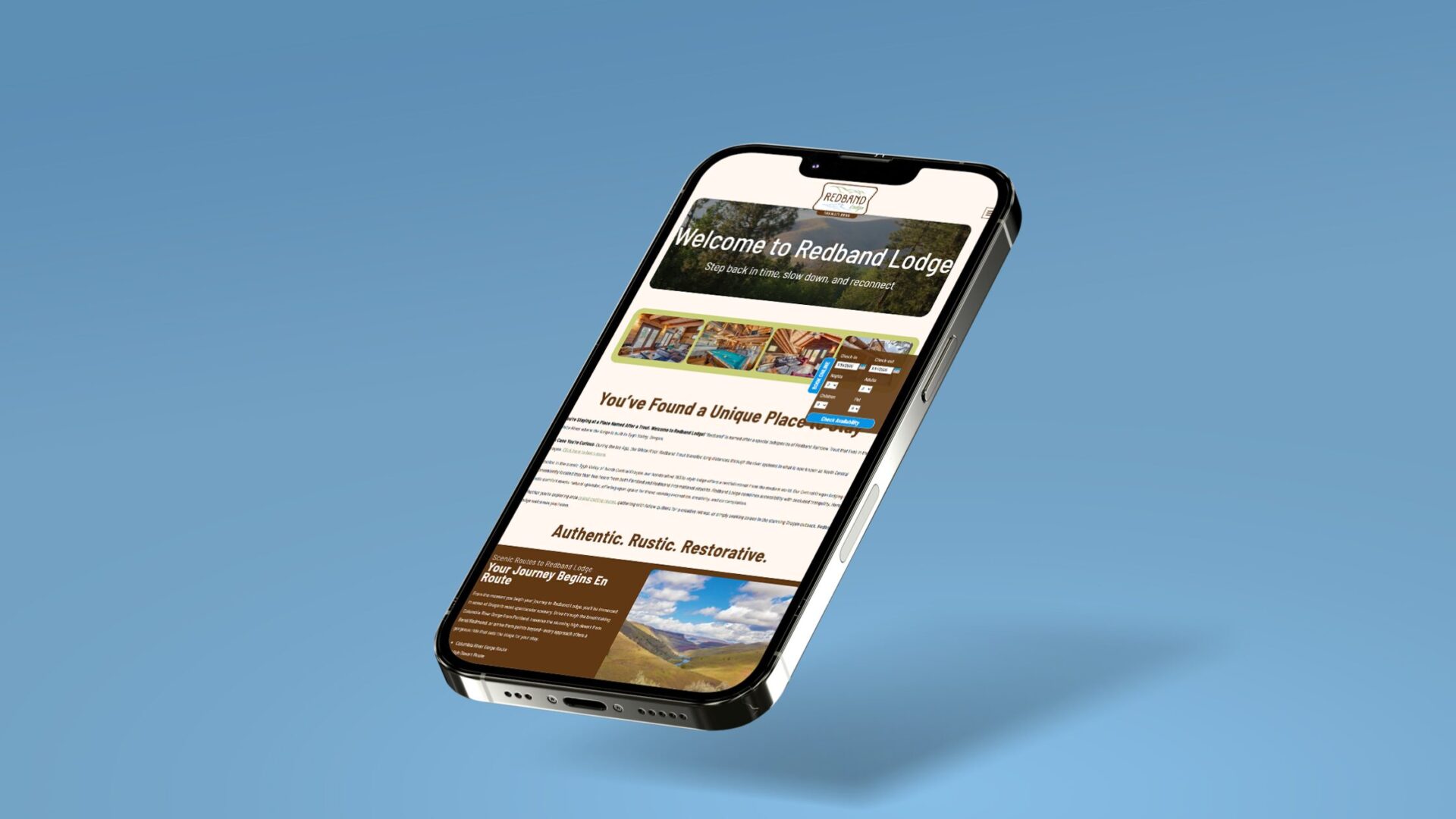
Mobile bookings now account for the majority of all hotel searches. On top of that, for many properties they also represent the fastest growing source of direct reservations. In other words, pay close attention to your mobile bookings.
Whether it is a last-minute weekend getaway or a same-day road trip stop, many guests are researching and reserving rooms directly from their phones. If your mobile experience is slow, clunky, or confusing, they will abandon you and book elsewhere.
The good news is that increasing mobile bookings does not require a massive redesign. Most of the time, it comes down to removing friction and making it incredibly easy to complete a reservation.
Here is how to do that…
1. Make Your Website Feel Built for a Phone
A truly mobile-friendly website does not feel like a shrunken desktop site. It feels intentional.
Think about how you actually use your phone. A lot of scrolling, swiping, and tapping. That means your mobile website needs to load fast and be responsive.
If your site loads slowly, you are already losing bookings. Large images, unnecessary animations, and heavy scripts can drag performance down. Prioritize fast load times and keep the design clean and focused.
Pro tip: You can test your mobile performance for free using Google PageSpeed Insights. It will show you exactly where your site is slowing down and what to fix.
Here is a simple gut check. Open your website on your own phone and ask:
- Can I find availability within five seconds?
- Can I see a clear call to action without scrolling forever?
- Does anything feel cramped or difficult to tap?
If the answer to any of those questions is no, start there.
A sticky Book Now button that stays visible as guests scroll is one of the simplest ways to increase conversions because it reduces friction and captures high-intent mobile users at the right moment. It removes hesitation and keeps the next step obvious.
2. Streamline the Booking Experience
This is where many hotels lose mobile revenue.
A guest taps Book Now with high intent. Then they face five steps, multiple form fields, and unclear pricing. That momentum disappears quickly.
Imagine standing at a front desk and being handed three clipboards before you can check in. That is what an overcomplicated mobile booking flow feels like.

Walk through your booking engine from start to finish and time it. Count the number of screens. Notice how often you have to type.
Mobile friction is only one piece of the puzzle. Broader website conversion strategy also plays a role, especially in how rates and room types are presented. You can explore our guide on website strategies that boost bookings, which complements the tactics discussed here.
Look for friction such as:
- Duplicate data entry
- Unclear room comparisons
- Hidden fees that appear late in the process
Transparent pricing builds trust. Surprise fees destroy it.
If possible, enable autofill and mobile-friendly payment options so guests can complete their reservation with minimal typing. The goal is progress with as few taps as possible.
3. Remove Small Frustrations That Add Up
Mobile users scan. They are not reading long, dense paragraphs.
Instead of thinking about design elements, think about obstacles. What might cause someone to pause or back out?
Common friction points include a phone number that cannot be tapped, an address that does not open maps, or policies that are buried three pages deep.
Fixing these issues is rarely dramatic. It is usually small adjustments: Make contact information interactive. Keep policies accessible without forcing guests to leave the booking flow. Avoid pop-ups that take over the entire screen.
Individually, these tweaks seem minor. Collectively, they create a smoother experience that feels professional and trustworthy.
4. Support the Way Mobile Guests Actually Book
Mobile bookings are often fast decisions made in real time. In fact, industry reporting shows that mobile bookings are driving a significant share of online travel growth in North America, further reinforcing why mobile optimization is no longer optional for lodging operators. According to a recent report on how mobile bookings drive North American online travel growth, the shift toward mobile continues to accelerate.
A traveler might be in the car, at an airport, or walking through town comparing options. They want clarity and confidence right now.
Your job is to remove doubt.
Make date changes simple. Surface near-term availability. Clearly communicate what guests gain by booking direct.
It is also worth noting that major OTAs actively incentivize mobile behavior. For example, Booking.com promotes mobile-only rates because their data shows that mobile users convert differently and respond to tailored pricing. Even if you are focused on direct bookings, this reinforces an important point. Mobile users behave differently, and your strategy should reflect that.
If inventory is limited, say so clearly and honestly. If there are perks tied to direct booking, position them near your call to action so they influence the decision at the right moment.
Mobile decisions happen quickly. Your site should help guests move forward without overthinking.
5. Test Like a Guest, Not Like an Owner
One of the most effective strategies is also the simplest.
Book your own room from your phone.
Do it without logging in. Do it on different devices if possible. Notice where you hesitate. Notice where you feel confused.
Then shift from opinion to data.
Review your analytics and look specifically at mobile performance. Compare mobile conversion rates to desktop. Identify where guests drop off in the booking funnel.
Even small improvements such as reducing one form field or clarifying pricing can increase conversions in a measurable way.
Mobile optimization is not a one-time project; it’s an ongoing refinement process.
Make Booking Effortless
Increasing mobile bookings is not about flashy trends or complicated tactics.
It is about reducing friction at every step.
When your website loads quickly, your booking engine is simple, and guests can move from browsing to reserving in just a few taps, mobile conversions rise naturally.
In today’s booking environment, mobile convenience directly impacts revenue. Every extra tap, delay, or surprise fee increases the chance that a guest returns to Google and books through an OTA instead.
When your mobile experience is fast, transparent, and effortless, you protect your margin and capture more direct revenue.
If you want a mobile-optimized website built specifically to convert more direct bookings, explore our hotel website design services and see how the right foundation can turn more mobile traffic into revenue.